Billion Dollar U.S. Energy Investment in Iran?

For those of us who regularly read the headlines about Iran, there was a particularly interesting one that stuck out today – one (reported by the Tehran Times and reposted by other media) about a U.S. company in Southern California called World Eco Energy entering into a preliminary agreement with government authorities in Iran to invest 1.18 billion in Iran’s renewable energy facility sector, namely in Iran’s fairly remote Chaharmahal & Bakhtiari province in the southwest of the country.  It was in the Iranian press as well, with amusing headlines like “Joint venturing of Chaharmahal & Bakhtiari Province and California.”  Specifically, World Eco will be building a facility that will generate 250 MW per day, converting solid waste into electricity.  This one surely has a lot of us Iran watchers and sanctions practitioners scratching our heads.  What’s going on?  Wasn’t this stuff sanctioned?

Well, there’s nothing on World Eco’s website.  Furthermore, the agreement is preliminary. Which means World Eco (and other involved parties) could have a specific license from the U.S. Department of the Treasury’s Office of Foreign Assets Control (OFAC) or not (it could perhaps be strictly conditioned on World Eco receiving all necessary approvals, be they from OFAC or the U.S. Department of Commerce’s Bureau of Industry & Security or “BIS,” which regulates so-called “dual-use” items that have both civilian and military application.  But $1 billion? In Iran?

First off, investment by U.S. persons in Iran is generally prohibited under the Iranian Transactions and Sanctions Regulations (ITSR).  In other words, a U.S. company like World Eco would need a license to even invest in a $1,000 CD, much less a $1 billion energy facility.  As you know, not only does the U.S. prohibit U.S. persons from investing or even working for Iran’s petrochemical and oil sectors, but through the Iran Sanctions Act (ISA), it can even sanction third country companies that do so.  However, here’s the catch – while U.S. sanctions are focused on preventing investment in Iran’s hydrocarbon (and obviously nuclear) sectors, the U.S. could perhaps be allowing companies to obtain licenses from OFAC to promote alternative energy in Iran on the grounds of environmental protection (and perhaps indirectly swaying Iran away from its apparent obsession with nuclear energy).

Indeed, last September, OFAC issued General License E, which allowed a wide range of philanthropic and civil society building activities with Iran.  One provision in this GL is authorization for certain “Activities related to environmental and wildlife conservation projects in Iran…”  The connection is tenuous, but maybe that’s all World Eco needed to convince OFAC (if it did indeed petition OFAC and obtain a license, and is not openly flouting the most robust sanctions regime the U.S. has ever imposed against any country ever, risking potentially billions in fines, not to mention imprisonment for its key personnel) that this type of investment be permitted – to help improve environmental quality of life and more broadly the world’s ecosystem.

Experience has shown that OFAC tends to stay within the confines of the letter of the law with regards to the spirit of the sanctions, although obviously licenses can be issued on a case by case basis for certain activities that OFAC deems consistent with U.S. policy interests.  Issuing specific licenses to U.S. persons to provide technical assistance to Iran with respect to the environmental sector (beyond that allowed in General License E) is something that is arguably very fathomable, as the environment knows no geopolitical boundaries, and because what happens in Iran’s environment ultimately affects other ecosystems.

Perhaps World Eco can speak to the authorities it’s maybe been granted? It was the weekend, and perhaps World Eco may come out Monday denying this – as exaggerations like this are not entirely rare in Iran’s media. We’ll have to wait and see.  All that said, the $1 billion investment in Iran by a U.S. would be truly a landmark milestone if indeed true.  Not impossible, perhaps, but very unique and potentially game changing if true.

Posted in Corporate, Iran, OFAC, Sanctions

The New IRS Offshore Voluntary Disclosure Program and US Sanctions on Iranian Bank Accounts

The Internal Revenue Service (IRS) announced last week that it was further incentivizing the self-disclosure by U.S. taxpayers of offshore financial assets and accounts not previously reported.  Specifically, the IRS modified the 2012 Overseas Voluntary Disclosure Program (OVDP) effective July 1, 2014, drastically reducing penalties for certain non-willful, non-disclosure of foreign financial assets.  This naturally creates questions for those who have not disclosed such accounts to the IRS and who may be in violation of U.S. sanctions on Iran as well. The IRS’s move appears to be aimed at motivating taxpayers to come clean on incomplete returns and follows on the coattails of the phase-in of the U.S. Foreign Account Tax Compliance Act (FATCA).  FATCA places strict measures on non-U.S. financial institutions failing to report accounts they maintain for U.S. taxpayers.

In its various inceptions, the OVDP allows taxpayers to pay a preset penalty (the actual amount has varied based on the program) on offshore assets and accounts previously not reported on the  Report of Foreign Bank and Financial Accounts (commonly referred to as the FBAR and FinCen 114) in order to avoid criminal prosecution.  In exchange for thorough and accurate disclosures, the IRS’s Criminal Investigation division will recommend to the U.S. Department of Justice that the disclosing taxpayer not be prosecuted. While there is very likely no FATCA reporting between Iranian financial institutions and the IRS, this by no means implies that those U.S. persons holding accounts in Iran are in the clear.  As such, responsible individuals should map out a strategy to come into compliance, particularly that penalties for violation of IRS regulations and OFAC regulations can be exceptionally punishing.

Revised and Reduced Penalties

A key point to notice when comparing the revised “2014” OVDP against its 2012 predecessor is the dramatic reduction in the penalty percentages.  Effective July 1, 2014, participants in the 2014 OVDP can benefit from a 5% penalty for non-willful non-disclosure of foreign bank accounts.  Previous penalties have typically been above 20%.  While the penalty for non-disclosure of bank accounts is 5%, they can vary for various other types of non-disclosures.

The Interplay with Iran

As many know, U.S. persons require a specific license from OFAC to hold bank accounts in Iran.  Absent such a specific license, holding bank accounts in Iran is prohibited under the Iranian Transactions and Sanctions Regulations, 31 CFR Part 560 as it constitutes the prohibited importation of services from Iran (and the contribution of funds into that account can be considered prohibited investment in Iran).

That said, many knowingly or unknowingly hold accounts in Iran.  If these accounts are in certain designated institutions like Bank Saderat, Bank Melli, Bank Tejarat and Bank Sepah (among a number of others), there is an additional violation of dealing with a prohibited party.  Further, such funds are potentially subject to blocking upon entry into possession of a U.S. person (such as a U.S. bank) and pulling money out of such banks requires a specific license from OFAC. Given the violation – many do not want to properly fill their FBAR forms in their tax returns.  This only exacerbates the person’s problems.  Accounts should be reported, and again, it goes to my point that what happens in Iran does matter in the United States.

Given the potential penalties that can arise from holding a bank account in Iran, individuals should naturally abstain from such behavior and only hold such accounts if they have specific licenses from OFAC. Those currently having accounts in Iran should very strongly consider voluntarily self-disclosing such accounts to OFAC and requesting authorization to liquidate and terminate those accounts and transfer the proceeds out of Iran.  Notably, OFAC views such disclosures very favorably (if the self-disclosure qualifies under OFAC’s definition of a “Voluntary Self Disclosure,” the maximum civil penalty is automatically reduced by half, with other mitigating factors, as applicable, can further reduce the amount).

Given the U.S.’ policy of encouraging divestment from Iran, there is little reason to think a petition to close an account in Iran will be denied by OFAC.  Not only does such self-disclosure put one on a more favorable footing with OFAC than waiting for OFAC to later discover the violation on its own, but it also enables the individual to accurately file any FBARs that must be reported.

Going Forward

Taxpayers seeking to take advantage of the revised OVDP must be approved by the IRS.  This involves obtaining an initial preclearance approval.  Upon approval, the taxpayer has 45 days to make the formal disclosure, although taxpayers may request an extension of up to 90 days.   Notably, even if the taxpayer cannot pay all the sums due under an OVDP self-disclosure, he or she can request that the IRS arrange an alternative payment plan. Bearing in mind that the IRS can look back to the previous 8 years of tax returns, it is vital that self-disclosures be filed in good faith and diligently.  OFAC can generally look back 5 years, although there can be tolling of the statute of limitations.

Conclusion

The IRS new program affords those who have not filed or adequately filed their FBAR disclosures with a powerful incentive to do so.  Although eligibility and non-prosecution are not guaranteed, the revised OVDP presents a unique opportunity for taxpayers who have non-willfully failed to file adequate and complete reports on certain foreign assets to disclose with minimal penalty.  Furthermore, while certain penalties have been drastically abated, the complexities of the program highlight the need for taxpayers to pay particular attention to compliance going forward.

Although holding foreign bank accounts and assets is not something unique to a select few, however, doing so without the sophistication of understanding one’s legal requirements can be the source of substantial civil and criminal liability under U.S. laws and regulations.  Given the sanctions on Iran, those holding such accounts in that country should realize that they not only face liability for non-reporting under the FBAR, but also potential civil and criminal penalties under OFAC regulations.

In accordance with IRS Circular 230, any U.S. federal tax advice provided or presented in this communication is not intended or written to be used, and at no time can be used by the reader, the direct or indirect recipient or any other taxpayer (1) for the purpose of avoiding any civil or criminal tax penalties that may be imposed on the reader, the direct or indirect recipient, or any other taxpayer; or (2) in promoting, marketing, or recommending to any other party any type of partnership or other entity, investment plan, arrangement, or other transaction addressed or otherwise discussed in this communication.  For more information on this disclaimer, please see Akrivis Law Group, PLLC’s website.

Posted in Iran, OFAC, Personal, Sanctions, Taxation

Iranian Sanctions Relief on Aviation: What’s Covered?

I was part of a three-member panel on Voice of America Persian News Network’s Ofogh program on Wednesday (April 23) on an episode that dealt with U.S. sanctions on Iran’s aviation industry (you can watch it by clicking here).  My co-panelists were Mr. Bijan Kian, former Head of the U.S. Export Import (ExIm) Bank and Captain Ali Foroughi, retired pilot for United Airlines.  The topics covered were the issue of the private jet in Mehrabad Airport bearing a U.S. flag (attributed to a visit by the brother of the Ghanaian president), to more importantly, the [dismal] state of Iran’s aviation industry and the prospects of improvement following recent U.S. relief on the sale of parts for Iran Air.  So what is this relief?

The previous status quo

It has been a number of years since the Office of Foreign Assets Control (OFAC) created a licensing regime for persons seeking to export parts for Iranian civilian aircraft. Generally speaking, the Iranian Transactions and Sanctions Regulations, 31 CFR Part 560 (the “ITSR”) allowed for persons to apply for licenses to sell parts.  This is specified in § 560.528, which states:

Specific licenses may be issued on a case-by-case basis for the exportation or reexportation of goods, services, and technology to insure the safety of civil aviation and safe operation of U.S.- origin commercial passenger aircraft.

A reasonable interpretation of this is that it only allows parts that are very much vital to the safe operation of an aircraft, and recent statements coming out of OFAC indicate that indeed even now jet engines are not part of the licensing regimes.  I have not ever heard of anybody selling such parts under a license, although OFAC has issued at least one license that I have heard from, before the Geneva P5+1 agreement with Iran in November 2013.

The new policy

The new law provides for a more clear licensing system for companies seeking to sell parts. It appears that the definition of  that are permissible is perhaps wider, but according to a Statement of Licensing Policy issued by OFAC on January 20, 2014, it is clear that this does not cover the sale of aircraft or cosmetic changes, etc.

This is a picture of me in the Voice of America studios with the only scale model of a Boeing 787 Dreamliner bearing Iran Air markings.  This was given as a gift by Boeing to Mr. Bijan Kian (former head of the US ExIm Bank). Indeed there is no plan to sell such planes to Iran given the current sanctions regime, but this could be a possibility in the future if sanctions are lifted.

This is a picture of me in the Voice of America studios with the only scale model of a Boeing 787 Dreamliner bearing Iran Air markings. This was given as a gift by Boeing to Mr. Bijan Kian (former head of the US ExIm Bank). Indeed there is no plan to sell such planes to Iran given the current sanctions regime, but this could be a possibility in the future if sanctions are lifted.

Currently, there have been reports of General Electric and Boeing receiving OFAC licenses to sell certain parts to Iran, and according to the VOA broadcast I was part of, this has been confirmed by the companies.  So what’s covered under the law? Per the Statement of Licensing Policy, it is clear that companies can now apply for licenses to do the following types of activities:

the exportation and reexportation of: services related to the inspection of commercial aircraft and parts in Iran or a
third country; services related to the repair or servicing of commercial aircraft in Iran or a third country; and goods or technology, including spare parts, to Iran or a third country.

Notably, this only covers Iran Air, and excludes airlines on OFAC’s Specially Designated Nationals (SDN) list.  Also, all work has to be completed in the 6-month window of the Joint Plan of Action (JPOA) issued following the Geneva talks.  That means, unless the agreement is extended or a final agreement is reached, everything must be completed by July 20. A bit ambitious perhaps1

My co-panelist on the VOA program, Captain Foroughi, was not impressed. He cited reports stating that one of Iran Air’s Boeings is only worth about $66,000 and that these parts could cost millions, without any increase in the value.  Nonetheless, this could help Iran Air procure safe parts, and not rely on an illicit market run by criminals smuggling such parts.

It remains to be seen whether Iran can iron out a deal with the P5+1 (or whether it even wants to) that would enable Iran to purchase new aircraft from companies like Boeing and Airbus. If such a thing happens, it could be a boon for such companies, as Iran’s fleet is in need of upgrading.


Posted in Iran, OFAC, Sanctions

Mentioned in The Wall Street Journal

Farhad Alavi, the author of this blog, was interviewed as part of a story in the Wall Street Journal on Iran’s sanctions relief following the P5+1/Iran agreement entered into in Geneva on November 24, 2013.  This article, which mentions Mr. Alavi and his firm, Akrivis Law Group, PLLC, can be found by clicking here.

Posted in Iran, OFAC, Sanctions

U.S. and EU Expand Sanctions on Russia

Both the United States and the European Union took further steps today to sanction certain entities within the government of the Russian Federation following the incursion by Russian forces into the Crimea in Ukraine. This action dovetails yesterday’s vote in the Crimea, where over 90% voted to secede from Ukraine and become annexed to Russia.  Today’s decision by the EU and President Obama represents a very bold step that very much widens the scope of U.S. sanctions against Russia. Furthermore, the European Union added 21 entities to its sanctions list.

A new U.S. Executive Order was announced, expanding on Executive Order 13360 (you may recall my law firm issued a Client Alert on that EO). Today’s Executive Order gives broader authorities to the President, enabling him to impose sanctions (and a visa ban) on certain individuals, and also to later impose them on certain persons who are officials of the Russian Federation, owned or controlled (or “purported” to act for or on behalf of) such officials, or those who materially assist such entities.

Among the people designated by the Treasury Department are former Ukraine Prime Minister Viktor Yanukovych, an aide to Russian President Vladimir Putin, the Head of the Federation Council, and the Deputy Head of the Russian Duma.

What This Means

Although these newly announced sanctions (and those imposed through Executive Order 13660 earlier this month) do not close the door to trade with Russia, they do limit many activities and heighten the requirement and expectation of U.S. persons doing business in or with Russia.  More specifically, businesses should take care to:

(1) Evaluate all business relations with Russia; and

(2) Perform more due diligence on existing and potential Russian customers (as well as from/in other Commonwealth of Independent States (CIS) jurisdictions; and

(3) Keep an eye towards future developments, as the new Executive Order gives the President great discretion to expand the coverage of the sanctions.

It is not likely at this point that OFAC would impose wide-ranging sanctions against Russia, however, recent developments have limited and can further pave the way to limit trade with Russia and increase the compliance requirements for trade with that country.


Tagged with: ,
Posted in Uncategorized

U.S. Issues Guidance for Implementation of Iran/P5+1 Geneva Joint Plan of Action

The U.S. Departments of the Treasury and State yesterday issued a joint official statement titled in response to Iran’s agreement with the five permanent members of the United Nations Security Council and Germany (the “P5+1”) in November 2013  in Geneva with respect to Iran’s nuclear program.  This publication, titled Guidance Relating to the Provision of Certain Temporary Sanctions Relief in Order to Implement the Joint Plan of Action Reached on November 24, 2013, between the P5+1 and the Islamic Republic of Iran, spells out changes to the sanctions regime maintained by the United States against Iran for the period starting January 20 and ending on July 20, 2014.  This is based on the recently issued Joint Plan of Action (JPOA) following the Geneva accord.

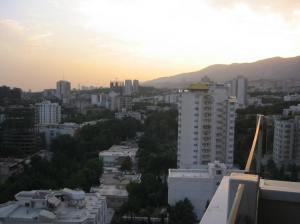
Tehran

Of particular significance is the fact that many limitations on dealings with certain entities that have been labeled as Specially Designated Nationals (SDNs) by the U.S. Department of the Treasury’s Office of Foreign Assets Control (OFAC) will be exempted for very defined, narrow purposes.  Further it is critical to note that while the JPOA may be extended, the validity of this sanctions relief, as of now, is certain only until July 20.

The JPOA rests on six core areas that will see some sanctions relief, specifically: (1) petrochemical exports; (2) Iran’s automobile industry; (3) precious metals; (4) civil aviation; (5) petroleum exports; and (5) humanitarian matters.  As the document itself spells out clearly, only the aviation and humanitarian issues will directly impact U.S. persons and foreign persons owned or controlled by U.S. persons.  Details are provided below.

  • Petrochemical Exports.  Third country entities importing Iranian petrochemical products will no longer be subject to potential U.S. penalties for doing so.  Furthermore, banks, shippers, and insurers in third countries who deal with such entities will not be subject to sanctions on the financial institutions or blocking sanctions on other entities, provided that dealings do not involve SDNs, other certain Iranian financial institutions, namely those designated solely under Executive Order 13599, are exempted.
  • Automotive Industry.   The United States will suspend secondary sanctions imposed this past summer on Iran’s automobile industry. This is critical as Iran’s automotive industry is by some measures its largest after energy. Under the JPOA, sanctions will be waived on entities that “knowingly engage in transactions for the sale, supply, or transfer to Iran of significant goods or services used in connection with the automotive sector of Iran that are initiated or completed entirely within the JPOA period.”  As such, this will include supply chain partners in addition to actual exporters.
  • Precious Metals.  The United States will suspend certain secondary sanctions on parties (including banks) dealing in precious metals such as gold with Iran, provided certain conditions are met. There are strict limitations on what funds in particular can be used for these metals.
  • Civil Aviation.  OFAC announced that it will soon issue a licensing guidance policy enabling U.S. persons (and non-U.S. persons owned or controlled by U.S. persons) to obtain specific licenses to engage in engage in certain transactions related to the overhaul of civilian aircraft.  Note there are two caveats – first, Iran Air is a permitted beneficiary, despite being on the SDN list; and second, all work must be completed before the JPOA expires.
  • Petroleum Exports. The United States has agreed to temporarily halt efforts to persuade purchasers of Iranian petroleum (namely China, India, Japan, South Korea, Taiwan and Turkey) to reduce their purchases of Iranian oil.  Furthermore, there will also be a waiver of sanctions on related transactions, including certain oil payments and shipping/insurance matters.  Interestingly, related transactions with the National Iranian Oil Company (NIOC), the National Iranian Tanker Company (NITC) and certain Iranian financial institutions (those only designated under E.O. 13599) will not be subject to U.S. sanctions.  Note this does not allow U.S. companies to deal with Iranian origin crude oil or related services.
  • Humanitarian Transactions. The P5+1 will be taking steps to ease Iran’s purchase and importation of humanitarian goods, such as food, medicine, and medical devices, which despite being authorized have become logistically difficult in part due to the ripple effect of other sanctions. This may include creating certain banking channels with third country banks. Notably, the presently authorized payment systems will continue to be compliant under the new system.  Also, there will be channels for the payment of tuition for Iranians studying outside the country.

A journalist asked me today what particularly stood out when I saw these guidelines.  Two things in particular stood out:

  • The now permissible (or at least non-sanctionable) transactions must be consummated within the six month JPOA period.   Unless the JPOA period is extended, it is difficult to foresee how in, for example, a plan to sell aircraft parts to Iran, the plan can be authorized, the parties negotiate successfully, the goods sold and the parts installed.

  • Will third country banks, shippers, insurers and counterparties deal with Iran given the narrow time window and uncertainty?  As I told the journalist, many of these banks have spent heftily on their compliance programs. Will they suddenly start accepting payments from SDN Iranian banks given the lack of clarity on the JPOA and its longevity?

What is clear is that the guidelines and upcoming policy will surely bring about questions, both for U.S. and third country entities. It will be interesting to see how much business does take place under the JPOA and whether or not it will serve as a prelude to Iran’s reintegration into the world economy.

I’ve written on this blog before as to what sanctions relief for Iran could look like. If all goes well and the parties are able to move forward, it will not be unforeseeable that Iran will want to be readmitted into the international SWIFT messaging system (used for global wire transfers between banks) and procure new civilian aircraft. Additionally, it will likely want relief from certain secondary banking sanctions, like the Iranian Sanctions Act (an American law that allows the United States to impose sanctions on companies investing more than a certain, limited amount in Iran’s energy sector) as well as the Comprehensive Iranian Sanctions And Accountability Divestment Act (CISADA), which places secondary limitations on many dealings with Iran, including the sale of refined petroleum to that country.

Posted in Corporate, Iran, OFAC, Sanctions

Is Iran *Really* Open For Business?

These days the media is full of articles on Iran being on the verge of opening for business.  An article in The New York Times today sums it up well – interest is high, but the sanctions laws have really not changed and logistical barriers keep enthusiasm to exactly just that, enthusiasm.

There is much talk of trade missions to Iran and I even saw an invitation to a conference on doing business in Iran post sanctions. Given that there is no clear outline as to what will be liberalized when, this may be considered a bit premature.

Of course, it’s not necessarily illegal to plan per se, but one has to be exceptionally careful with that.  One can be, like President Obama, “cautiously optimistic” and have an eye to the future. That said, deal singing, etc. (outside what is legal and the very limited spaces that will become legal (see a previous post on this blog on this exact topic of post-Geneva) are probably a bit farther off the horizon than many would hope, especially for Americans.

If anything, the enforcement of compliance will likely be increased by US authorities in the coming months to prevent cracks in the sanctions regime.  This, coupled with misunderstandings by businesses and individuals, can potentially expose careless entities to huge penalties, civil and criminal.  In addition to OFAC, there is also the Department of Justice, which brings forth criminal suits.  There are many cases related to sanctions violations on Federal dockets around the United States, and if still within the Federal statute of limitations (generally 5 years with some exception) US Attorneys can still bring forth cases for activities that were illegal when they happened, even if those same activities are legal now.  Again, as stated before on this blog, compliance will be all the more important.  While it is important to see what is liberalized, knowledge of that space should be definite and one should not rely on gut feeling and news articles alone.  Remember, that there are still sanctions on Myanmar, and the Iraq sanctions took many years to be repealed (even after a US-led invasion!).

Assuming Iran and the P5+1 enter into a more permanent agreement in the months to come, expect more liberalization of certain areas.  These may create very unique business opportunities for US persons, given Iran’s large potential.  The key is not to be cavalier and to pay particular attention to compliance – remember, even companies trading with Europe and east Asia allocate resources to this, and Iran should obviously be no exception.

Tagged with: ,
Posted in Uncategorized

Steering Clear of the OFAC Black List: How Much Checking is Necessary?

I was speaking to one of my [very diligent and thorough] individual clients the other day about his upcoming lawsuit in Iran and pending property sale, whereupon he asked me a fantastic question. Specifically, he asked “how do I know if the property buyer is fronting for a SDN [Specially Designated National]?”  Exactly. How does one know?

Let’s step back a minute first. If you are new to this blog, you may not know what a Specially Designated National or SDN is.  SDNs are basically black listed entities that are so designated for various reasons.  They are all placed on the same list (the SDN list) but can be there for different reasons – such as narcotics trafficking, involvement in global terrorism (why Bank Saderat Iran is there), helping the proliferation of weapons of mass destruction (why Bank Melli is listed).  You may not know that this is not an “Iranian” list – there are companies and individuals from around the world, even friendly countries.  From Colombian drug kingpins to the Islamic Revolutionary Guards Corps (IRGC) to various financial institutions to trading companies in Dubai to certain African entities, the SDN list represents a motley crew of entities (interestingly, for those who have read Juan Zarate’s Treasury’s War, you will recall that many in Latin America used to call it “La Lista Clinton,” as many names were added on that list during Mr. Clinton’s presidency).

Being on the SDN list does not have a uniform meaning as entities are on the list for various reasons.  The regulations giving way to those particular designations bring with them different restrictions. For example, there are many Iranian banks on the SDN list, but certain banks such as Melli, Mellat, Saderat, Sepah, and Tejarat are under much stricter restrictions for US persons. So, whereas a non-commercial remittance can generally come from Bank Parsian, which is on the list, such remittances almost always require specific licenses if coming from Bank Melli, Mellat, Saderat, Sepah, and Tejarat.  The general rule of thumb is that SDNs are off limits for US entities, including individuals.  Oftentimes, funds or property in which they have an interest can be blocked upon possession by a US person or entry into the United States (see my previous blog posting on bad banks).

So back to Iran. What can happen if you (intentionally or unintentionally) deal with a designated entity while engaging in a personal transaction, such as the sale of land? Let’s use the Islamic Revolutionary Guards Corps (IRGC) (or Sepah Pasdaran Enghelab Eslami or “Sepah” as it is known in Persian). Turns out the IRGC is designated under a number of different regulations, which means you would have to look at all the regulations. Note one is the Weapons of Mass Destruction Proliferators Sanctions Regulations, 31 CFR Part 544 (the “WMDPSR”).  Turns out Section 201 states, in relevant part, that:

(b) The prohibitions in paragraph (a) of this section include, but are not limited to, prohibitions on the following transactions when engaged in by a United States person or within the United States:

(1) The making of any contribution or provision of funds, goods, or services by, to, or for the benefit of any person whose property and interests in property are blocked pursuant to paragraph (a) of this section; …

There you go, generally no dealings with these folks without a specific license, save certain limited exceptions. Dealings with such entities largely have the impact of being null and void. (See Section 202).

So, back to the client’s question. Let’s say the buyer presents itself as somebody/something else, Company X, or John Doe.  How can you know that this party is not a front? This is especially troublesome, given the use of many fronts in Iran (some even argue that the arrested Iranian billionaire Babak Zanjani, also on the SDN list, is a front for others – that’s a subject for a different post altogether).

The key rule of thumb is “reason to know.” In classical lawyer parlance, “it depends.”  As with many areas of the law, reason to know is not defined and is vague. Do you have reason to know that the IRGC is involved? The IRGC probably does a large part of its business through it many front companies, both in Iran and beyond. So there can be reasons to know – such as the rumor mill in Iran, so-called common knowledge.  So say Company X is out to buy your property and you have heard, or word on the street is that Company X is a Sepah entity. Sure, Company X is a separate legal entity from Sepah, but remember, the designation covers entities “owned or controlled” per the regulations.  Therefore, you should stay away as you have reason to know. Even if you don’t know, the burden is should you have known?

Therefore, you’ll want to make sure the company not on the SDN list. Then comes the due diligence. Remember, “reason to know.” Does everybody say that Company X is a Sepah entity? Have you asked the right questions? Have you documented your inquiries? How much due diligence have you done? These are all used to (1) naturally prevent an illegal deal; and (2) help mitigate penalties with OFAC if in fact your counterparty does wind up being an SDN.  The amount of homework you do naturally depends on some variable factors – how big the deal is (a $1 million deal will certainly require more due diligence than a $100,000 deal). Naturally, all this work should be documented to present to the government if an adverse situation was to arise.  An attorney can help gauge this.  Sufficient compliance beforehand can prevent much of these potentially very costly mishaps.  In today’s environment of heightened compliance, individuals also have to make sure they are doing things professionally and diligently, particularly as transaction values can be relatively high (property cases in Iran exceeding $1 million, for example, are very common).

Oh and don’t forget, make sure that the transaction (even with a non-SDN) does not require an OFAC license and if it does, make sure you have that specific OFAC license in hand before starting anything in Iran!

Tagged with: ,
Posted in Uncategorized

Funds Transfers from Iran: A Bad Case of the Black-Listed Bank

A key problem I often see among those whose who want to transfer money from Iran is the issue of designated Iranian banks.  To be clear, all Iranian banks are on OFAC’s Specially Designated Nationals (SDN) list (the biggest of the black-lists maintained by the US Government), but of course certain of these banks can be used for some transactions (like non-commercial, personal remittances or certain medical/food transactions).  However, OFAC has a zero-tolerance policy with other financial institutions (e.g., Banks Saderat, Melli, Mellat, and Tejarat, among others).  This means that dealings with such banks are prohibited even for generally licensed transactions, unless of course the US person obtains OFAC authorization, which can be challenging.

How does this impact people in real life? Say you are selling your property in Iran. Basically from the buyer not issuing a check on a designated bank’s account to not depositing the check in such a bank to not wiring the money to an exchanger’s account at such a bank, no step should involve any designated banks.  Granted, a US bank that receives the wire from a jurisdiction like Dubai or Turkey may not see any indicia of such a bank’s involvement back in Iran. That does not mean it is legal to deal with such a bank or that nobody will find out. In fact, US depository institutions are required to block such funds if they feel that a designated bank like Saderat had an interest in them, unless of course, the transfer is licensed by OFAC.

For those who are interested in the technicalities, two of the key regulations for the designation of certain Iranian banks are the Weapons of Mass Destruction Proliferators Sanctions Regulations, 31 CFR Part 544 (the “WMDPSR”) and the Global Terrorism Sanctions Regulations, 31 CFR Part 594 (the “GTSR”).  More broadly, the authority is contained in Executive Orders 13382 (June 28, 2005) and 13224 (September 23, 2001).  The former deals with non-proliferation and the latter addresses anti-terrorism efforts.

Notably, the current regulations do not mean that any money somebody may have left you in a Bank Melli account, for example, is off limits. One can obtain a specific OFAC license to transfer such funds to the United States, but you must obtain that license before you do anything with that bank. And no, moving funds out of such a bank does not render them “clean” in OFAC’s eyes – in fact almost all dealings (including closing accounts therein) with such entities is illegal without OFAC authorization.  Even if you are not directing or directly engaging in such transactions, the US government’s position is that these funds are generally tainted unless they are otherwise licensed.

A number of activities by US persons with Iran that needed specific licenses can now be done under general license. However, it is incumbent on the US person(s) to ensure that designated entities have no role in the transactions? May claim this is challenging. Of course it is hard, however, this highlights the fact that US persons engaging in activities in Iran must recognize that US law follows them when it comes to sanctions.  It also illustrates that it is imperative to maintain ownership over the entire transaction process as you are responsible to take ownership.

Notably, obtaining such licenses generally appears to take longer than many other license requests from OFAC to engage in other personal transactions. Given the sensitivity towards these banks, the review period seems to be more intense. As such, it is best to make sure the application is ideally filed substantially in advance.  Again, remember that transactions that involved certain banks do not need licenses, even though all Iranian financial institutions are on the SDN list. It is critical that one understand the full spectrum of what is and is not permitted to avoid any compliance violations (and potential blocking of funds).

Posted in Uncategorized

What Kind of Sanctions Relief will Iran be Getting Now?

Farhad Alavi
Akrivis Law Group, PLLC, Washington, DC

Alas, Iran and the P5+1 (the five permanent members of the United Nations Security Council and Germany) finally reached a temporary agreement in the early hours of Sunday Geneva time on Iran’s nuclear framework. This agreement will have a duration of 6 months, effectively serving as a placeholder for a more comprehensive and final agreement.  In exchange for certain limitations on Iran’s nuclear program, the P5+1 have decided to afford it with some limited sanctions relief.  The key word is limited, but of course limited does not mean insignificant.Indeed, contrary to what some opponents of the deal (along with some very optimistic people) may believe or lead others to believe, the sanctions against Iran are still very much in place.  However, some parts of the relief are noteworthy, and we will have to wait to see how these concessions will legally take shape.  In the U.S., we will have to wait until the Department of the Treasury’s Office of Foreign Assets Control (OFAC), the Department of State, and more broadly the White House issue general licenses, directives, and Executive Orders, respectively – all of which will define the boundaries of what is permitted and what will continue to be barred.  Also notable is that the sanctions relief afforded Iran is reversible should it renege on its commitments.

So what is the P5+1 offering Iran?  Beyond the agreement that the U.N., U.S., and European Union (E.U.) will not impose new sanctions on Iran’s nuclear related program (note that does leave room for human rights and terrorism-related sanctions and designations), here are some key parts, with some possibilities as to how they could potentially work. Remember, the laws have not changed yet, and as such the analysis below is in many ways speculation.

1. Suspension of sanctions on Iran’s petrochemical exports.  

This does not mean that the U.S. can now import petrochemical products from Iran.  What it does likely mean is that companies in third countries importing petrochemicals from Iran will no longer face penalties from the United States.  The petrochemical industry in Iran is significant, and this is therefore critical for that country.

2. Suspension of U.S. and E.U. sanctions on Iran’s dealings in gold and precious metals.  

This is an awkward but important one – due to its being effectively locked out of the international banking system, Iran was increasingly relying on moving money around the world in precious metals like gold and silver.  Notably, this can also suspend the imposition of limitations on companies supplying Iran with metals like aluminum, etc.  What is interesting is that limitations on third country entities doing significant Iranian Rial transactions imposed this past summer will continue in effect.

Tehran

3. Suspension of U.S. sanctions on Iran’s automobile sector and related services.  

These sanctions were imposed this past summer as part of the Iran Counter-proliferation and Freedom Act (IFCA).  The U.S. will effectively suspend its secondary sanctions on companies in third countries assisting Iran’s automobile industry. This is very significant as even international companies shipping parts for Iranian automobiles could be subjected to U.S. sanctions. 

4. Licensing Regime for Civilian Aircraft Servicing in Iran.

It is very important to note that under the U.S.’ Iranian Transaction and Sanctions Regulations (ITSR) promulgated by OFAC, U.S. companies can obtain specific licenses to overhaul U.S. made Iranian civilian aircraft in third countries (e.g., the United Kingdom or United Arab Emirates).  Under the Geneva accord, U.S. companies will apparently now be able to obtain licenses to engage in such repairs physically in Iran, which will probably make this work easier for the Iranians and the services more sought after. Given Iran’s ageing civilian aircraft fleet, this is a very notable development.

5. Facilitating Humanitarian Trade.

This is more significant than it may appear at first glance.  While this type of trade has largely been authorized under law for quite a while through a general and specific licensing regime, it has been very difficult due to the fact that UN and perhaps more importantly US sanctions have led international banks to cut dealings with Iran. This has created stop-gaps in the flow of medicine, medical goods, foods, etc. to Iran.  What appears to be the case is that there will apparently be efforts made to allow certain non-designated banks and specific banks in the west to process such payments. If this happens, the financial transfers will become generally quicker and more reliable (and therefore lessen the need for the use of third country exchange houses, a current practices that I’m sure many banks in the U.S. will be happy to no longer deal with if electronic wiring becomes possible again.

Remember, the above is based on information released tonight. These agreed upon provisions have not been made into law yet, and we will have to wait until the actual laws, regulations, and guidance are published before seeing the clear definitions and limits of these laws.  My overarching concern is that while the relaxation of certain unilateral sanctions may open up some opportunities for U.S. companies, business may misinterpret news articles and pictures of handshakes between Secretary of State Kerry and Iranian Foreign Minister Zarif and think sanctions have been repealed.  This is clearly not the case and this is where people start making mistakes – mistakes that can be very, very costly, both civilly and criminally, as well as in reputation.  As such, if anything the need for compliance becomes more heightened.  Expect this to become a trend, particularly as the laws may continue to change for the coming months or even years.

Posted in Corporate, Iran, OFAC, Sanctions
Akrivis Law Group, PLLC
(202)686-4859
Washington, DC
E-Mail

Enter your email address to subscribe to this blog and receive notifications of new posts by email.

Join 109 other subscribers

DISCLAIMER

This website aims to provide notes and commentary on international legal, business, and political developments in economic and other sanctions. It is intended solely for information and entertainment purposes and should in no way be construed as legal advice. Laws, regulations, and policies change from time to time so some information on older posts can very easily be dated. If you have any questions or are unclear on any of the subject matters addressed or discussed on this site, please consult a licensed legal professional. Views presented in the comments and outside links do not necessarily reflect those of the website author. All external links on this website to articles and documents are external and provided for informational purposes only. They have no relation to the author of this website unless specified otherwise.

This website is independent of Akrivis Law Group, PLLC and any statements of opinion posted on this website are therefore not to be considered positions of Akrivis Law Group, PLLC.

Quotations and linkages do not imply any type of endorsement.

Copyright 2026 Farhad R. Alavi.

All rights reserved.


US Sanctions Law Blog
USSanctions.com